Brianna Jackson’s breakout as a rapper
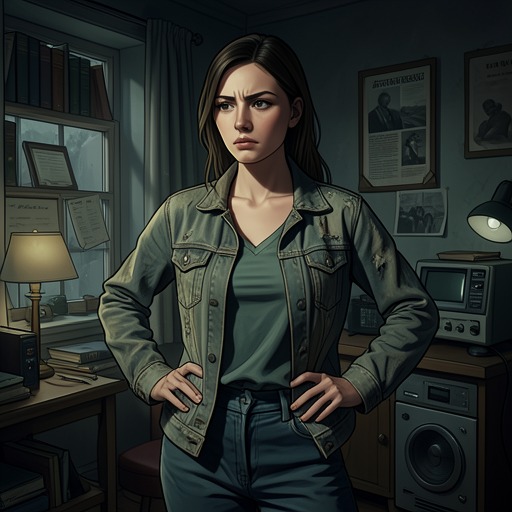
On the Come UpBrianna Jackson’s breakout as a rapper begins when Supreme hears “On the Come Up” and recognizes it as a potential hit, then helps carry it from Brianna’s phone to a mass audience. The resulting surge in streams, followers, and recognition makes a career she had imagined feel possible, but it also turns her into a public image others claim to understand: the daughter of the murdered rapper Lawless, a supposed threat, or a marketable version of a “hood” persona. Her rise is therefore both an opening and a test of who gets to define what her music means.
Recognition and the First Push
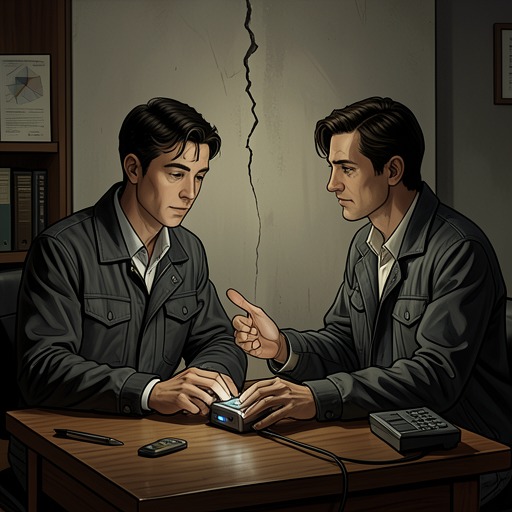
Brianna’s rise starts with a private listen. After taking her earbuds out and returning her phone, Supreme smiles and tells her the song is a hit that could jump-start her career. His enthusiasm matters because Brianna has not yet uploaded the track. He urges her to post it and send him the link, promising to make calls and seek buzz after the holidays, when people return from vacation. The first step toward a public career is thus both Brianna’s own recording and a door opened by Supreme’s industry contacts.
Supreme keeps his word. When Curtis shows Brianna Blackout’s front page, the site has paired a photograph of her at the Ring with a headline identifying her through Lawless and declaring that her new heat has “killed us.” The article embeds “On the Come Up” from her Dat Cloud page. Brianna notices that the headline leaves out her name, even as it uses her father’s notoriety to frame her arrival. The exposure is immediate: she shouts that the song has received twenty thousand streams, and Curtis tells her the number is still climbing and that she is trending.
The attention changes how she moves through school. Students who have never spoken to her begin greeting or pointing her out, while the chain associated with her father draws additional looks. In Long Fiction, someone plays her song before class; Mrs. Burns tells the students to turn it off. Brianna is elated enough to hold back a retort. In Poetry, Mrs. Murray calls her the MC of the hour and links her hip-hop success to her grades. These encounters make the song audible in ordinary school life, where recognition is no longer confined to the Ring or a website.
From Numbers to Possibility
Brianna initially experiences the surge as a sudden opening. Seeing streams rise and classmates respond makes her reconsider the boundary between ambition and fantasy: making it as a rapper no longer seems like something her imagination alone has supplied. More than two weeks after Blackout posts the track, followers and streams continue to increase. At dinner with her grandparents, a passing car plays the song aloud—a small, public sign that the recording has traveled beyond her immediate circle.
The new visibility arrives alongside a return to the Ring. Aunt Pooh picks Brianna up for another battle, with no opponent named in advance; readiness for the unknown is part of what the Ring means to her. Yet the song’s growing reach has not necessarily reached everyone at home. Jay is at class and Trey is at work, and Brianna thinks neither knows about the track; she notes that Jay rarely uses the internet beyond YouTube and Facebook, while Trey avoids social media because he thinks it promotes insecurity. Her ascent is therefore unevenly visible: strangers online and at school may recognize her before the people closest to her do.
The rise also makes her father’s chain more than a family object in public. At the Ring, a Crown sees it and recognizes Brianna as Lawless’s daughter, drawing attention to her father’s name and the danger attached to that association. The chain earns her glances at school and becomes a point of recognition in the battle setting, where Lawless’s legacy can be read as both inheritance and exposure. Her public identity is not built from the song alone; audiences connect the emerging rapper to a history she did not create.
Visibility, Stereotypes, and the Role
The scale of attention intensifies after the Ring parking-lot encounter. Supreme observes that phones were pointed at the group and predicts that people will present it as a “Ghetto Rapper Has Ghetto Encounter” story. He tells Brianna that others will run with that framing regardless of what she intended. His advice is to play whatever role the audience expects and use its assumptions to make the business work in her favor. The proposal is practical, but it exposes the cost of visibility: she is being asked to navigate an image that may be profitable precisely because it reduces her to a stereotype.
The videos and streams bring recognition without giving Brianna control over how she is read. She is called ghetto, ratchet, and a hood rat without home training; she is angry and hurt that speaking up or losing her temper can make others dismiss her. The song’s popularity thus coexists with a narrowing public judgment. People hear her words and see footage, then treat an interpretation of her as settled fact, even when it does not match the person she understands herself to be.
That pressure also has a gendered dimension. At the Ring, a man questions whether music made for Brianna can suit a girl, and others smirk. Brianna answers with a pointed joke about nursery rhymes; the laughter turns the exchange, and some of the men give her dap. Her quick reply wins a moment of acceptance, but the encounter demonstrates the extra work she has to do to earn respect in a male-dominated rap setting. The success of her performance does not erase the test; it shows her finding a way through it.
The same double standard resurfaces when Hype discusses the song on air. He describes its references to weapons and suggests that Brianna implies she would kill police. Brianna objects that he has misrepresented what she meant and points out that her father rapped about such material at sixteen without provoking the same reaction. Hype admits that her age and gender caught him off guard. Her breakthrough has made her lyrics a public controversy, but the scrutiny is not neutral: the adult male rapper’s comparable performance was treated differently from that of a sixteen-year-old girl.
Industry Pressure and Artistic Control
Supreme’s support is real, but it comes with a theory of how Brianna should use attention. He argues that publicity of this kind is a rare opportunity, contrasts her buzz with Dee-Nice’s, and says he has a major deal in the works for his son if he can keep his act straight. When Brianna resists a song written for her, Supreme insists that music is a business and points to the money available through James Irving. He even offers to supply people who would make the song’s image look more authentic, treating performance as something the industry can manufacture around a marketable impression.
Brianna’s objection is not simply that she dislikes the proposed song. Hype has already mocked her as though she had a ghostwriter; accepting one would make the accusation true and leave her feeling phony. Supreme counters that Lawless was not a gangster when they met: he had been in a church choir and worked to support Brianna’s mother and brother. Supreme says he urged Law to rap street material and associate with the Garden Disciples to appear authentic, but that Law took the role seriously. He tells Brianna to be smarter and to play the role without becoming it. His account makes the advice more troubling: the strategy that once shaped her father’s persona is being offered again, now as a way to capitalize on her own sudden success.
For Brianna, the revelation changes how she sees Supreme’s mentorship. Without his sunglasses, she recognizes that he regards her as a second chance—a do-over of her father. He has helped her song gain an audience, yet his plan risks turning her talent into a repeat of the past. The contrast between his promise of opportunity and his readiness to package her identity clarifies the central conflict of her breakout: commercial access may widen her platform while narrowing the terms on which she can speak.
A Breakthrough on Her Own Terms
The song’s success later becomes a point of contention in the public discussion of school protest and violence. On Hype’s show, Brianna responds to the petition seeking to remove “On the Come Up” from Dat Cloud with anger, arguing that the news had made her the villain without asking why students protested. When Hype redirects the discussion to the lyrics, she challenges the assumption that the song caused people to act. The episode shows how attention can detach a track from its creator’s account of what it addresses, turning visibility into a demand that she defend herself on someone else’s terms.
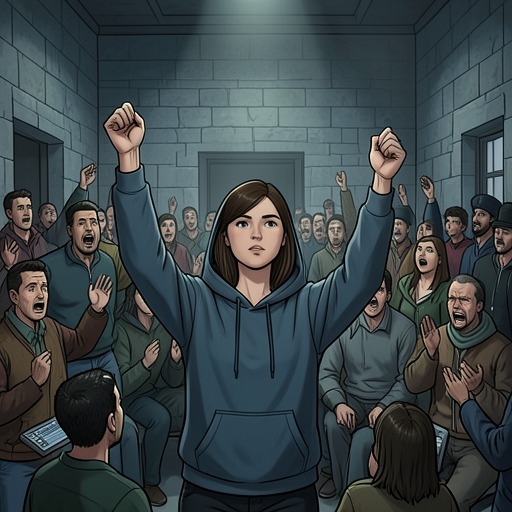
Her clearest answer comes through performance. In a freestyle, Brianna refuses to be a joke, a pet, a puppet, or a clone, and insists that she will not say words that are not hers. She identifies herself as a daughter, sister, hope, and mirror, rejecting both the sellout label and the thug label. The verse connects her own image to the conditions she sees in Garden Heights, while refusing to claim that rapping about violence makes violence her identity. Its force lies in the distinction: she can speak about what she sees without pretending that the performance is the whole of who she is.
The cheers that follow mark a different kind of recognition from the headline, the stream count, or the attention of a crowd filming a confrontation. Here Brianna’s words set the terms of the encounter. Her breakout began when others recognized a hit and amplified it; its deeper achievement is her insistence that visibility does not grant the audience or the industry ownership of her voice. The career she once regarded as merely possible becomes inseparable from the work of staying its author.